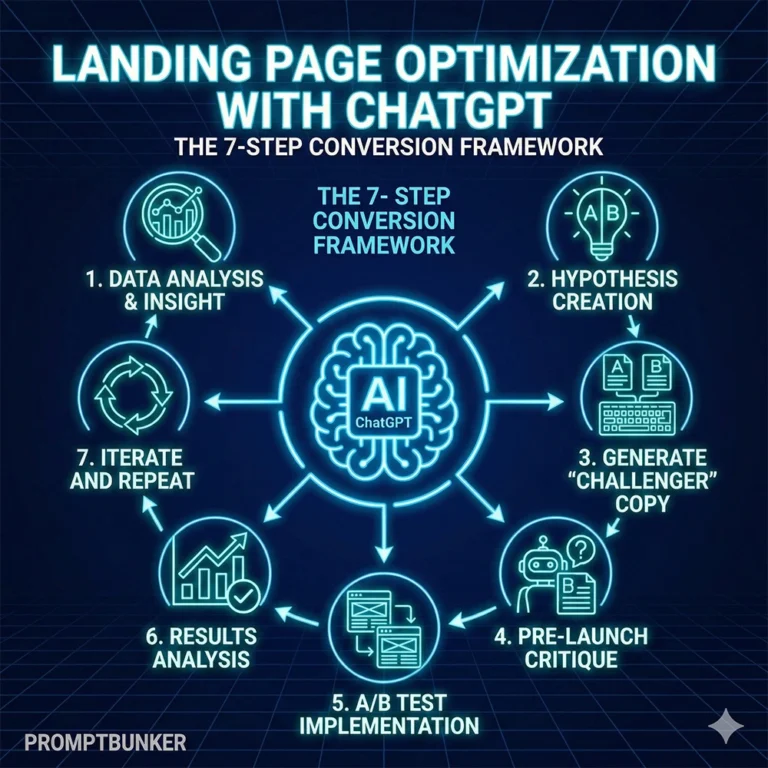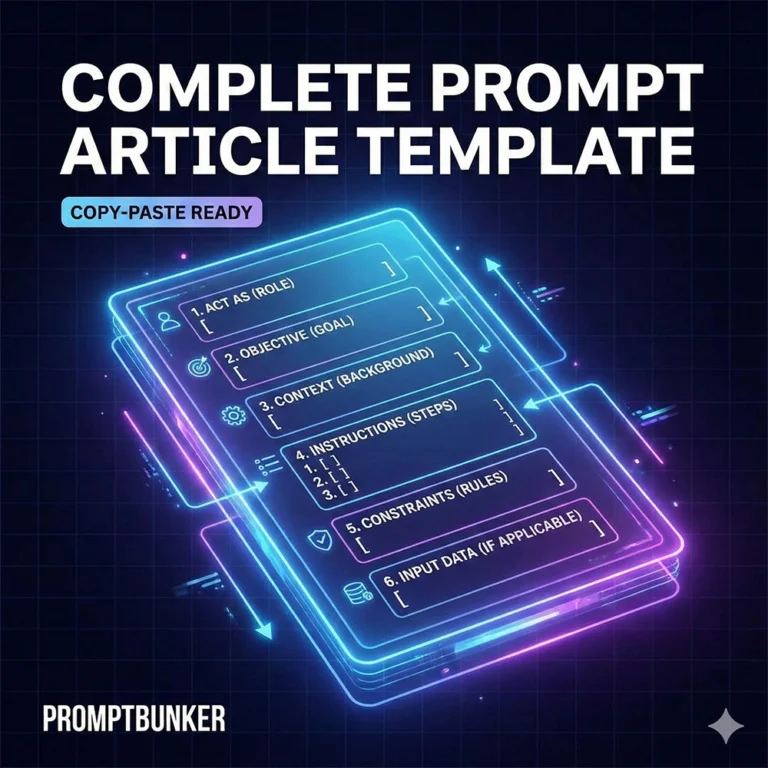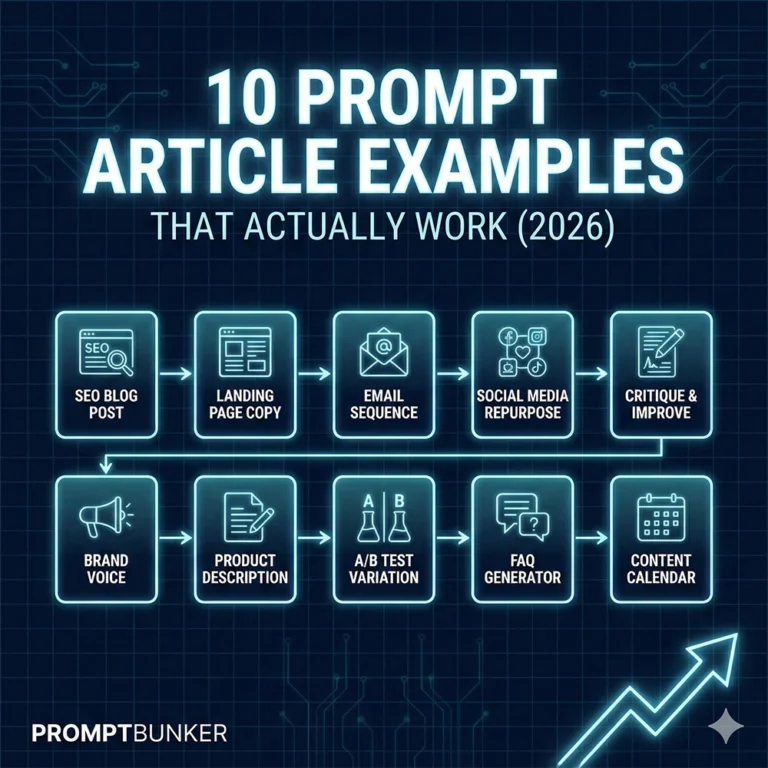

A high-converting landing page is the cornerstone of any successful digital marketing campaign. It’s the place where visitors become leads and prospects become customers. But crafting compelling copy that drives action is a major challenge, even for experienced web designers. This is where AI, specifically ChatGPT, can be a total game-changer.
Effective landing page copy can boost conversion rates by over 120%, according to a 2025 study by the Digital Marketing Institute [1]. By leveraging AI with the right prompts, you can systematically create persuasive, high-impact copy for every section of your landing page. This guide provides over 50 battle-tested ChatGPT prompts designed to help you write landing page copy that not only reads well but also converts.
Why Landing Page Copy Matters for Conversions
Before diving into the prompts, it’s crucial to understand why copy is so influential. Your landing page copy has several critical jobs:
- Grab Attention: The headline must immediately capture the visitor’s interest.
- Build Interest: The opening paragraphs need to articulate a problem the visitor recognizes.
- Create Desire: The body of the copy must present your solution in a compelling way, focusing on benefits over features.
- Drive Action: The call-to-action (CTA) must be clear, urgent, and easy to follow.
Poor copy fails at one or more of these stages, leading to high bounce rates and lost opportunities. These prompts are structured to address each of these critical stages effectively.
Part 1: Hero Section & Headline Prompts
The hero section is the first thing a visitor sees. Your headline and sub-headline must convey your core value proposition in seconds.
Headline Prompts
- Benefit-Driven: “Act as a conversion copywriter. Write 5 benefit-driven headlines for a landing page offering [Product/Service]. The main benefit is [Primary Benefit]. The target audience is [Target Audience].”
- Problem-Agitation: “Generate 5 headlines that first state a common problem for [Target Audience] and then hint at a solution. The problem is [Problem].”
- Direct & Clear: “Create 5 clear and direct headlines for [Product/Service]. The headlines should state exactly what the product is and who it’s for.”
- Question-Based: “Write 5 engaging, question-based headlines that make [Target Audience] think about [Problem].”
- Urgency/Scarcity: “Generate 5 headlines that create a sense of urgency or exclusivity for a limited-time offer on [Product/Service].”
Sub-headline Prompts
- Elaboration: “For each of the following headlines, write a sub-headline that elaborates on the main benefit: [Paste Headlines Here].”
- Problem-Solving: “Write 5 sub-headlines that explain how [Product/Service] solves [Problem] in a tangible way.”
- Feature Highlight: “Create 5 sub-headlines that highlight the most unique feature of [Product/Service], which is [Unique Feature].”
- Social Proof: “Generate 5 sub-headlines that incorporate social proof, such as ‘Join 10,000+ happy customers’ for [Product/Service].”
- Objection Handling: “Write 5 sub-headlines that address a common objection to buying [Product/Service]. The main objection is [Objection].”
Part 2: Value Proposition & Benefits Prompts
Once you have their attention, you need to clearly articulate your value. This section focuses on benefits—what’s in it for the customer?
- Core Value Proposition: “Act as a brand strategist. Distill the following features of [Product/Service] into a single, powerful value proposition statement. Features: [List 3-5 Features].”
- Benefit Bullets: “Transform the following list of features into a bulleted list of benefits. Focus on the outcome for the user. Features: [List Features].”
- Emotional Benefits: “For [Product/Service], generate a list of 5 emotional benefits a user will experience. For example, instead of ‘saves time’, use ‘feel more in control of your day’.”
- ‘Before and After’ Scenario: “Write a short ‘before and after’ narrative for a customer using [Product/Service]. Before, they struggled with [Problem]. After, they achieved [Outcome].”
- Unique Selling Proposition (USP): “Analyze these competitors: [List 2-3 Competitors]. Based on their offerings, define a Unique Selling Proposition for [Product/Service].”
Part 3: Features & How It Works Prompts
Explain the practical side of your offering. How does it work, and what are its key features?
- Feature to Benefit: “For each feature below, write a short paragraph that first describes the feature and then explains the direct benefit to the user. Features: [List 2-3 Features].”
- ‘How It Works’ Section: “Create a simple, 3-step ‘How It Works’ section for [Product/Service]. The steps should be: 1. [Action], 2. [Action], 3. [Action]. Use clear, simple language.”
- Technical Explanation: “Explain the technical feature of [Technical Feature] in simple, easy-to-understand terms for a non-technical audience.”
- Use Case Scenarios: “Describe 3 specific use-case scenarios for [Product/Service], showing how different types of users can benefit from it.”
- Analogy/Metaphor: “Generate an analogy or metaphor to explain how [Product/Service] works. For example, ‘It’s like having a personal assistant for your finances.'”
Part 4: Social Proof & Testimonial Prompts
Build trust and credibility by showing that other people have had success with your product.
- Testimonial Request Template: “Write a friendly email template to send to a happy customer asking for a testimonial for [Product/Service].”
- Testimonial Formatting: “I have the following testimonial: ‘[Paste Testimonial Here]’. Reformat it for a landing page by pulling out the most impactful sentence as a headline.”
- Case Study Summary: “Summarize a case study about a client who achieved [Result] using [Product/Service] into 3 compelling bullet points for a landing page.”
- Trust Badges/Logos: “Write a short headline to go above a section displaying logos of companies that use our product, such as ‘Trusted by Industry Leaders’.”
- Data-Driven Proof: “Craft a sentence that incorporates the following data point as social proof: ‘[Data Point, e.g., 50,000 downloads]’. Example: ‘Join over 50,000 users who have transformed their workflow.'”
Part 5: Call-to-Action (CTA) Prompts
The final, crucial step. Your CTA must be clear, compelling, and action-oriented.
- Primary CTA Button: “Generate 10 variations for a CTA button for [Action, e.g., ‘Sign Up’, ‘Buy Now’]. Make them benefit-oriented (e.g., ‘Get Your Free Plan’).”
- Secondary CTA: “Create 5 options for a secondary, lower-commitment CTA, such as downloading a free guide or watching a demo.”
- Urgency-Driven CTA: “Write 5 CTAs that create a sense of urgency for a limited-time offer, using words like ‘Now’, ‘Today’, or ‘Before it’s gone’.”
- Risk-Reversal CTA: “Generate 5 CTAs that include a risk-reversal element, such as ‘Start Your Free Trial’ or ‘Get a 30-Day Money-Back Guarantee’.”
- Click Trigger Copy: “Write short ‘click trigger’ copy to place below a CTA button to handle last-minute objections. Examples: ‘No credit card required’, ‘Cancel anytime’. Create 5 options for [Product/Service].”
How to Customize These Prompts
These prompts are a starting point. The best results come from customization. Before using a prompt, always fill in the bracketed information with as much detail as possible. Provide your AI with the same level of detail you would give a human copywriter.
- Be Specific: Instead of “a new app,” say “a new iOS app that helps busy parents plan meals.”
- Define the Voice: Instead of “friendly,” say “friendly, encouraging, and slightly humorous, like a helpful older sibling.”
- Iterate: Don’t accept the first output. Ask the AI to refine its suggestions. Use follow-up prompts like, “Make it shorter,” “Make it more professional,” or “Now write it from the perspective of a customer who loves the product.”
By mastering these prompts, you can transform your landing page creation process, delivering higher-quality, conversion-focused websites for your clients and your own business.
References
[1] Digital Marketing Institute (2025). The State of Conversion Rate Optimization. Retrieved from dmi.org/reports/cro-2025