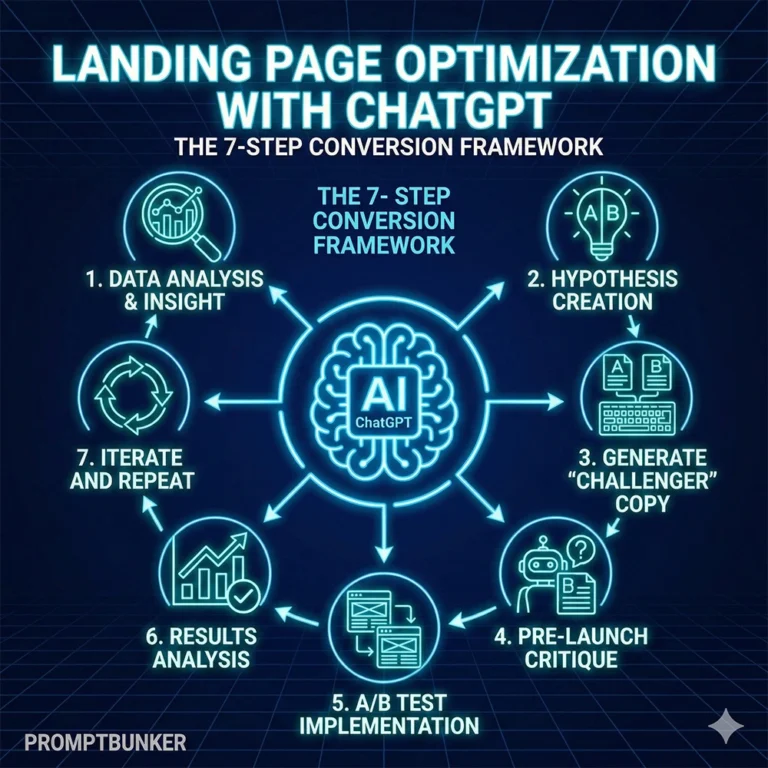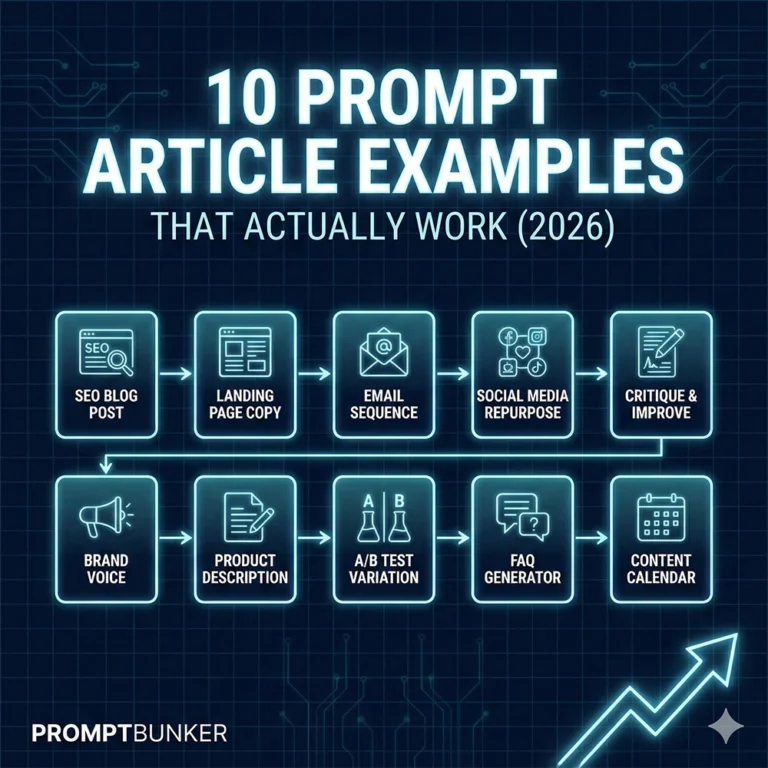

A/B testing is the cornerstone of effective conversion optimization. But one of the biggest bottlenecks in the testing process is coming up with meaningful variations to test. You know you need to test your headline, your call-to-action, and your body copy, but creating multiple, distinct versions of each can be a slow, creative grind.
This is where AI can revolutionize your workflow. Instead of spending hours brainstorming different angles, you can use a series of targeted prompts to generate a wide range of copy variations in seconds. This allows you to test more ideas, learn faster, and ultimately, drive better results.
This guide will walk you through the prompts you need to instantly generate copy variations for every key element of your A/B tests.
The Foundation: A Clear Hypothesis
Before you start generating copy, you need a clear, testable hypothesis. A good hypothesis gives your test a purpose and direction. For example:
Hypothesis: “By changing the headline to be more benefit-oriented, we can increase clicks on the primary CTA button because it will better resonate with the user’s primary motivation.”`
With this hypothesis in mind, you can now generate targeted variations.
1. Generating Headline Variations
The headline is the most critical element to test. You can ask the AI to generate variations based on different psychological angles.
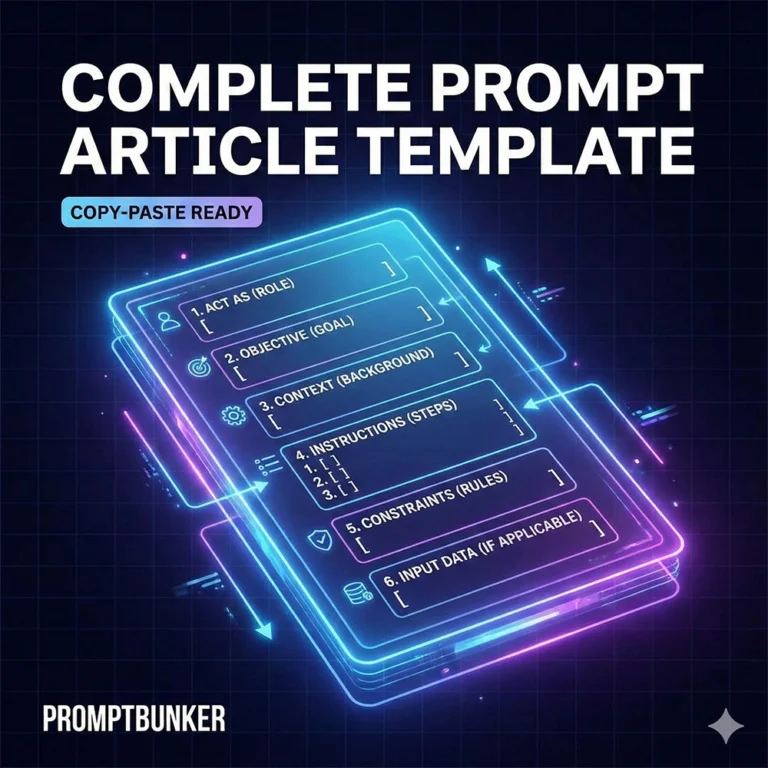
Prompt to Use: `”Act as a conversion copywriter. I am running an A/B test on my landing page headline. My hypothesis is that a more benefit-oriented headline will perform better. The product is [Your Product] and the target audience is [Your Audience].
Generate 5 new headline variations. Each variation should focus on a different angle:
- Direct Benefit: State the main benefit clearly.
- Problem-Focused: Agitate the user’s main pain point.
- Social Proof: Incorporate an element of social proof (e.g., number of users).
- Curiosity-Driven: Create intrigue without giving everything away.
- Urgency/Scarcity: Imply a limited time or availability.”`
This prompt gives you a diverse set of headlines to test, each based on a proven copywriting technique.
2. Generating Call-to-Action (CTA) Variations
Small changes to your CTA button text can have a huge impact on conversions. Test different verbs, lengths, and benefit statements.
Prompt to Use: `”Generate 5 variations for my CTA button text. The action is [Your Action, e.g., ‘to download a free guide’]. The variations should be:
- Standard: A clear, simple command.
- Benefit-Oriented: Focus on what the user gets.
- First-Person: Written from the user’s perspective (e.g., ‘Get My Guide’).
- Low-Friction: Emphasize ease or lack of commitment.
- Urgency-Driven: Encourage immediate action.”`
3. Generating Body Copy Variations
Testing body copy can be more complex, but you can focus on the opening paragraph, which is critical for keeping users engaged.
Prompt to Use: `”Rewrite the following opening paragraph for a landing page in 3 different styles:
- Story-Driven: Start with a relatable story or anecdote.
- Data-Driven: Start with a surprising statistic or data point.
- Direct and Bold: Make a bold claim or statement upfront.
Original Paragraph: [Paste Original Paragraph Here]”`
This allows you to test which narrative approach best captures your audience’s attention.
From Generation to Iteration
Generating variations is just the first step. The true power of using AI in your testing workflow is the ability to iterate quickly. Once you have a winning variation, you can feed it back into the AI and ask it to refine it further.
By integrating these prompts into your A/B testing process, you can dramatically increase the speed and scale of your optimization efforts. You move from a slow, manual process to a rapid, AI-powered cycle of testing, learning, and improving.
Looking for a complete set of A/B testing prompts? The PromptBunker Webflow Accelerator Kit includes a full suite of prompts specifically designed for conversion optimization, helping you generate and test ideas faster than ever before.