
In the competitive world of e-commerce, a product description is far more than just a label—it’s your 24/7 virtual salesperson. A great description can turn a casual browser into a loyal customer, while a poor one can leave them confused and clicking away. In fact, 87% of shoppers rate product content as extremely important when deciding to buy [1]. But writing unique, persuasive copy for hundreds of products is a monumental task.
This is where AI and prompt engineering come in. By using carefully crafted prompts, you can generate high-quality, on-brand, and SEO-friendly product descriptions at scale. This guide provides over 30 specialized prompts for various e-commerce sectors, designed to help you create descriptions that not only inform but also sell.
The Anatomy of an Effective E-commerce Prompt
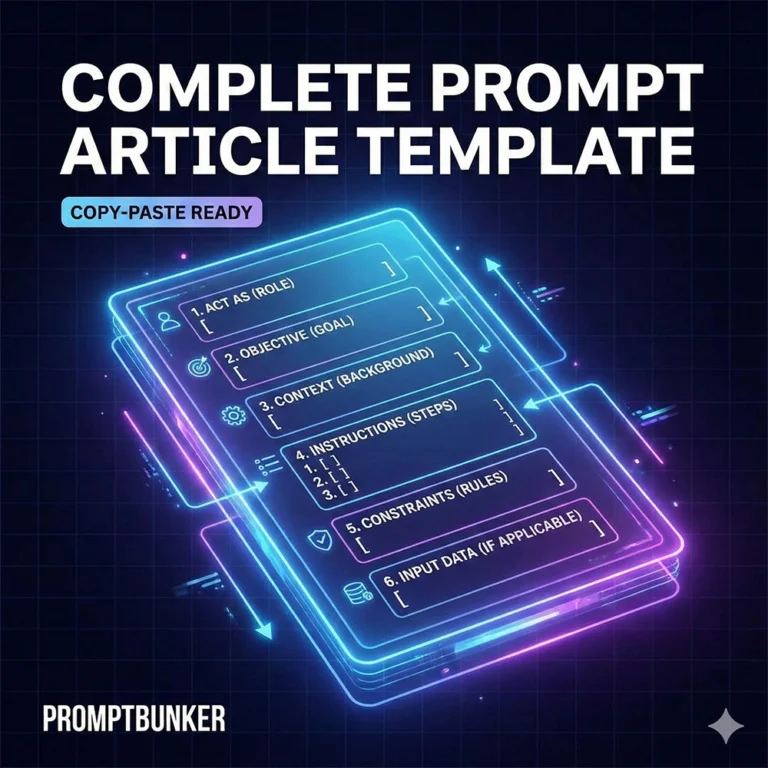
To get the best results from an AI model like ChatGPT, your prompt needs to be more than a simple request. A powerful e-commerce prompt should act as a creative brief, providing all the necessary ingredients for the AI to work its magic.
Here’s a template you can adapt:
Act as an expert e-commerce copywriter specializing in [Your Industry, e.g., sustainable fashion]. Write a product description for the following item.
- **Product Name:** [Product Name]
- **Key Features:** [List 3-5 features]
- **Target Audience:** [Describe your ideal customer]
- **Brand Voice:** [e.g., Playful and witty, Luxurious and elegant, Minimalist and modern]
- **Desired Format:** [e.g., A 100-word paragraph followed by 5 bullet points]
- **SEO Keywords:** [Include 2-3 primary keywords]
Part 1: Prompts for Fashion & Apparel
Fashion copy needs to be evocative, focusing on feel, fit, and style.
- The Storytelling Prompt: “Tell a story about the ideal occasion to wear this [Product Name, e.g., ‘Linen Sundress’]. Describe the setting, the feeling, and the experience. The tone should be romantic and free-spirited.”
- The Material & Fit Prompt: “Describe the [Material, e.g., ‘100% organic cotton’] of this [Product Name] in a sensory way. Focus on how it feels on the skin. Also, describe the fit ([e.g., ‘relaxed, flowy fit’]) and how it flatters the body.”
- The ‘Style It With’ Prompt: “Write a short section called ‘How to Style It’ for this [Product Name]. Suggest 3 different outfits or occasions, for example, ‘For a casual brunch, pair it with…’.”
- The Durability & Care Prompt: “Highlight the durability and ease of care for this [Product Name]. Frame it as a long-lasting investment piece. Mention it is [e.g., ‘machine-washable’].”
Part 2: Prompts for Electronics & Tech
Tech descriptions must balance technical features with real-world benefits, making complex specs accessible.
- The Problem-Solver Prompt: “Start by describing a common problem the target audience faces ([e.g., ‘low battery anxiety’]). Then, introduce the [Product Name] and explain how its [Key Feature, e.g., ’48-hour battery life’] solves that problem.”
- The ‘For The…’ Prompt: “Write a description for the [Product Name] targeting a specific user persona. For example, ‘For the Digital Nomad’, ‘For the Competitive Gamer’, or ‘For the Busy Parent’. Highlight the features most relevant to them.”
- The Feature-to-Benefit Table: “Generate a two-column table for the [Product Name]. The first column should list 4 key technical features, and the second column should explain the direct benefit of each feature in simple terms.”
- The Unboxing Experience Prompt: “Describe the unboxing experience of the [Product Name]. Focus on the premium feel, the thoughtful packaging, and the satisfying moment of revealing the product.”
Part 3: Prompts for Home & Living
Home goods copy should focus on creating an atmosphere, selling a lifestyle, and highlighting craftsmanship.
- The Ambiance Prompt: “Describe the ambiance this [Product Name, e.g., ‘Hand-poured Soy Candle’] creates in a room. Use sensory language—smell, sight, and feeling—to paint a picture of tranquility and comfort.”
- The Craftsmanship Prompt: “Tell the story behind how this [Product Name] is made. Highlight the artisan craftsmanship, the quality of the [Material], and what makes it a unique piece.”
- The Functional Elegance Prompt: “Write a description that balances both the beauty and the functionality of this [Product Name]. Explain how it not only looks good but also makes life easier or more organized.”
- The Perfect Gift Prompt: “Position this [Product Name] as the perfect gift for a specific occasion ([e.g., ‘a housewarming’, ‘a wedding’]). Explain why it’s a thoughtful and memorable choice.”
Part 4: Prompts for Beauty & Wellness
Beauty copy needs to be trustworthy, focusing on results, ingredients, and self-care rituals.
- The Ingredient Spotlight Prompt: “Focus on the star ingredient, [Ingredient Name], in this [Product Name]. Explain what it is, where it comes from, and its primary benefit for the skin/hair.”
- The Ritual Prompt: “Describe using this [Product Name] as a self-care ritual, not just a routine. Use calming and restorative language to evoke a spa-like experience at home.”
- The Results-Oriented Prompt: “Write a description that focuses on the tangible results users can expect after using this [Product Name] for a specific timeframe ([e.g., ‘In just 2 weeks’]). Use phrases like ‘You’ll notice…’ and ‘Experience…’.”
- The ‘Free From’ Prompt: “Highlight what this [Product Name] is ‘free from’ ([e.g., ‘parabens, sulfates, and artificial fragrances’]). Explain why this is important for the health-conscious consumer.”
SEO-Optimizing Your AI-Generated Descriptions
Generating the copy is only half the battle. It needs to be discoverable. Use this prompt to refine your descriptions for search engines.
- The SEO Refinement Prompt: “Take the following product description and optimize it for SEO. The primary keyword is ‘[Keyword]’ and secondary keywords are ‘[Keyword 2]’ and ‘[Keyword 3]’. Integrate them naturally into the copy and suggest an SEO-friendly title.”
[Paste your generated product description here]
Quality Control: Editing Your AI Content
AI is a powerful assistant, not a replacement for your judgment. Always review and refine the generated content.
- Check for Accuracy: Ensure all technical specs, ingredients, and claims are correct.
- Inject Brand Voice: Tweak the language to ensure it aligns perfectly with your brand’s unique personality.
- Fact-Check: AI can occasionally invent details. Verify any specific claims or statistics.
By combining these expert prompts with your own creative oversight, you can build a scalable and effective system for creating e-commerce product descriptions that captivate and convert.
References
[1] NielsenIQ (2025). The Future of E-commerce: Content is Everything. Retrieved from nielseniq.com/global/en/insights/report/2025/future-of-ecommerce/